How to Remodel a Small Kitchen
What changes when the space will not take the standard answer. The room where a remodel changes the most and forgives the least.
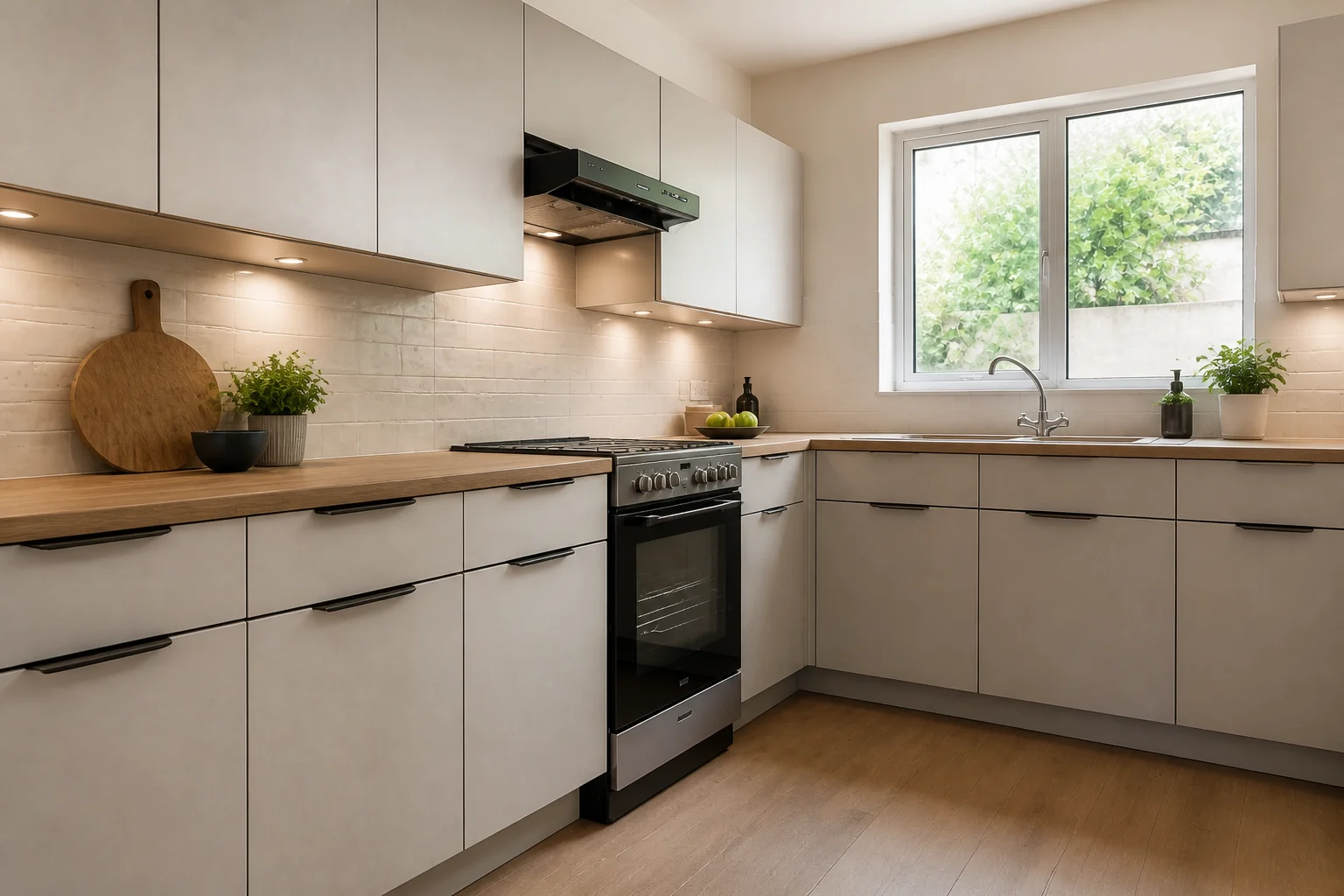 BeforeAfter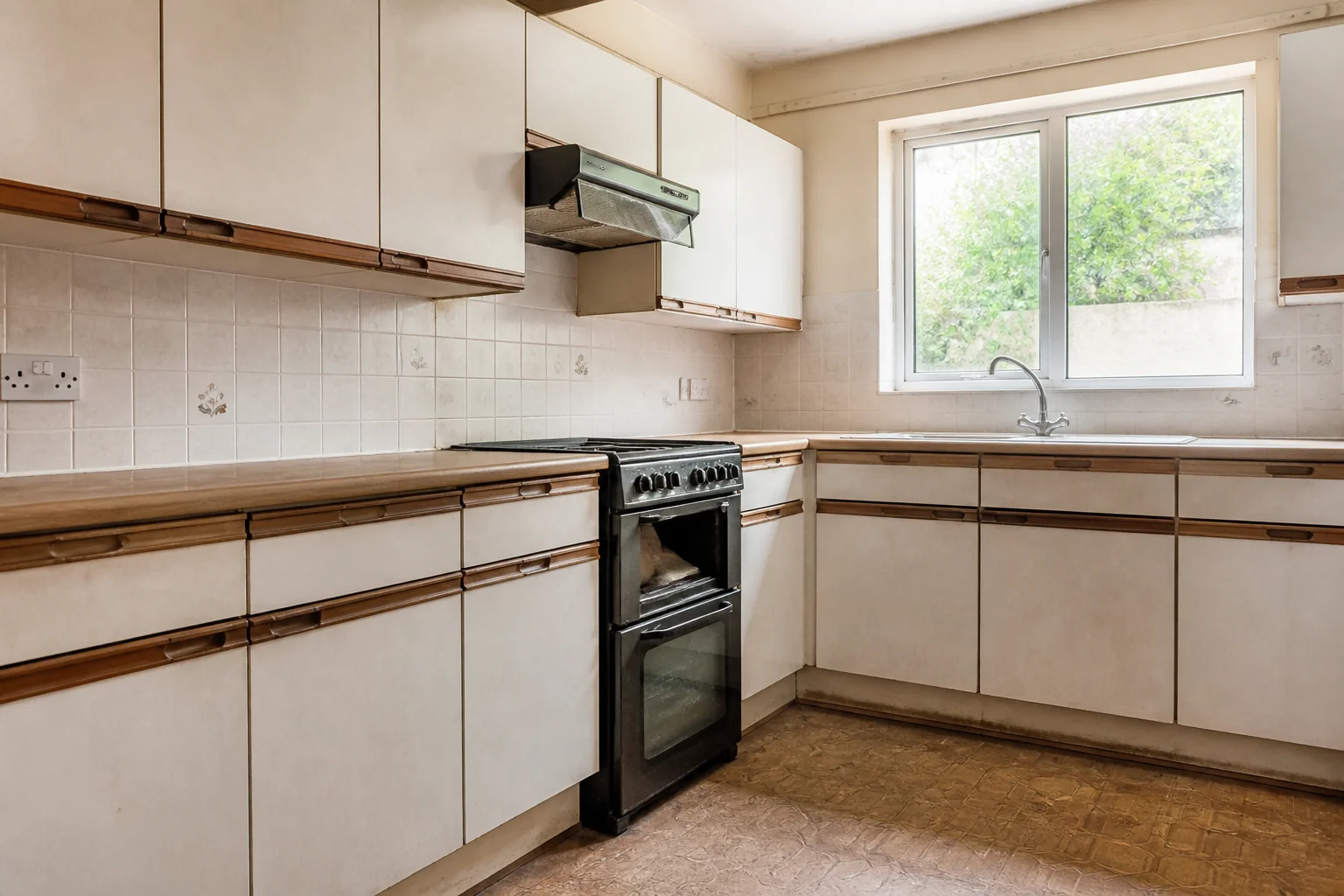
- 1
The one thing that changes everything
In a galley under 8ft wide, run cabinets to the ceiling on one side only and keep the opposite run open. Two facing walls of upper cabinets is what makes a narrow kitchen feel like a corridor.
- 2
What the dimensions still demand
A small room does not get to skip its clearances — it gets to choose which ones to spend on. Keep the sink, range and fridge within a triangle whose sides total 13–26ft — tighter feels cramped, wider means walking. Leave 42in of clear floor in a one-cook kitchen and 48in where two people work. Allow at least 15in of landing space beside the fridge on the handle side.
- 3
Where the space actually goes
Most of it disappears into cabinet doors and boxes, countertops, backsplash. Deciding which of those earns its footprint is the whole exercise in a room this size.
- 4
Light it to feel larger
Under-cabinet strips first — they do the actual work and no ceiling fixture replaces them. Then a general layer on dimmers, and pendants over an island sized so they clear sightlines at 30–36in above the counter.
Questions
- What should I decide first in a kitchen remodel?
- A kitchen remodel is really three decisions stacked on each other: where the sink, range and fridge sit, what the cabinets look like, and what the surfaces are made of. Move the first and the project doubles.
- What goes wrong most often?
- New cabinets in the same bad layout, so the kitchen looks fixed and still works badly. A backsplash chosen against a countertop sample rather than the actual slab.
- Will it work in a small kitchen?
- In a galley under 8ft wide, run cabinets to the ceiling on one side only and keep the opposite run open. Two facing walls of upper cabinets is what makes a narrow kitchen feel like a corridor.
- Can I see it on my own kitchen before starting?
- Yes — photograph the space and run it through the Studio. It is generated imagery, so compare the render against your photo rather than treating it as a plan.