How to Remodel a Small Walk-In Closet
What changes when the space will not take the standard answer. Hanging heights and depth. Everything else is trim.
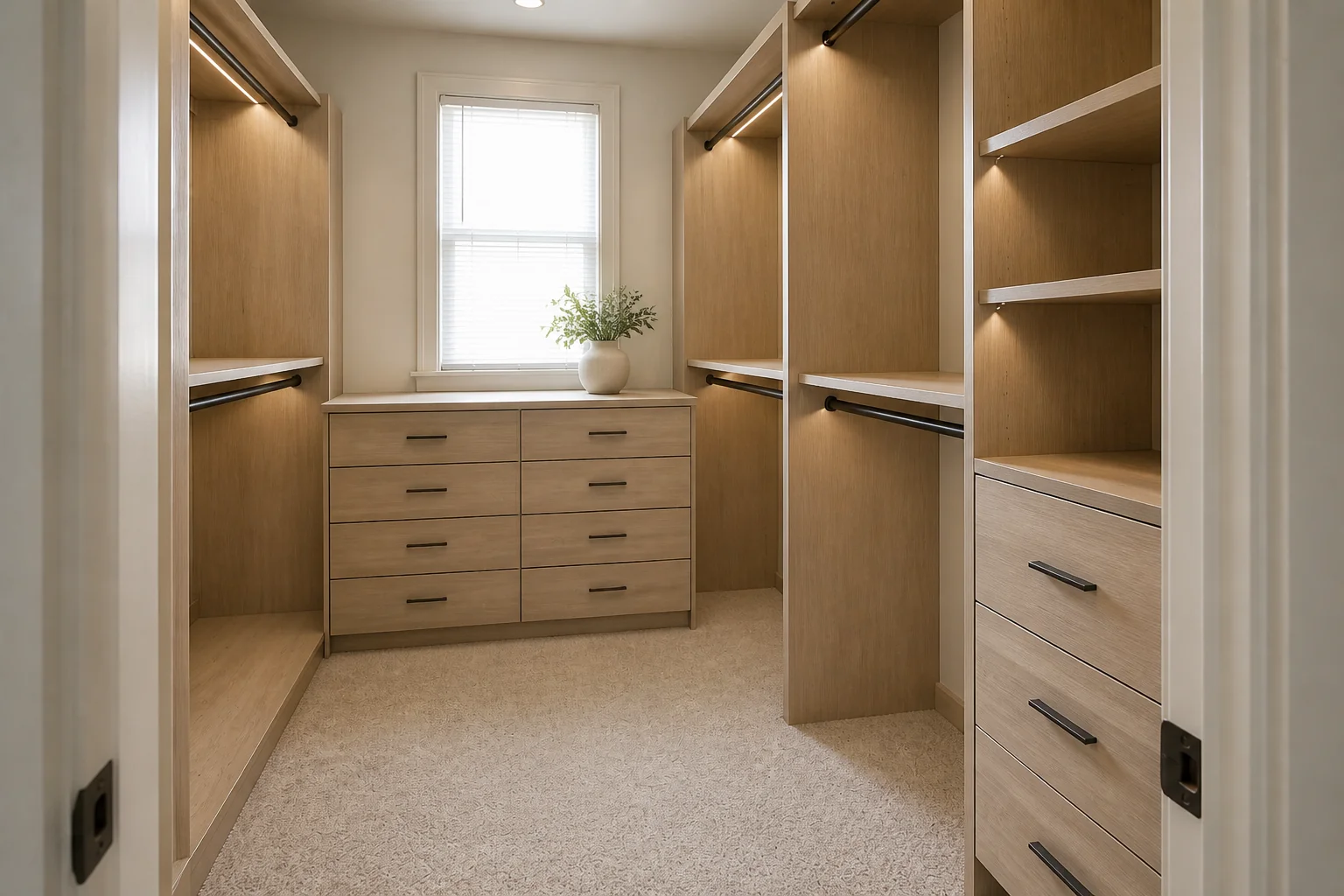 BeforeAfter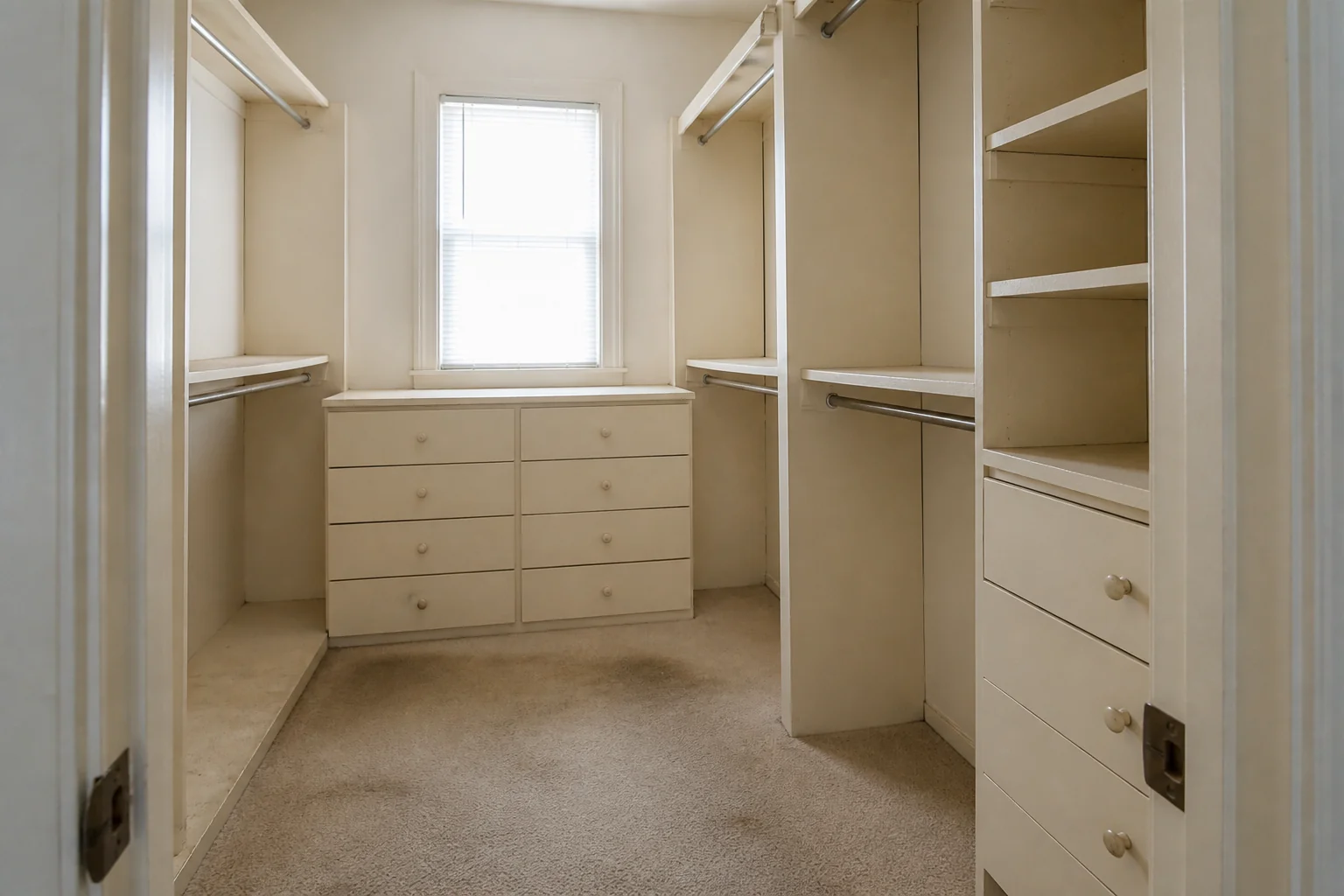
- 1
The one thing that changes everything
A reach-in of 6ft, double-hung, holds more than a badly planned 8×8ft walk-in, because none of it is aisle. Only go walk-in if the room can give up 36in of pure circulation.
- 2
What the dimensions still demand
A small room does not get to skip its clearances — it gets to choose which ones to spend on. Double-hang at 42in and 84in for shirts and jackets; single-hang at 66in for dresses and coats. Hanging depth is 24in — at 22in sleeves crush against the back. A walk-in needs 36in of aisle with hanging on one side, 60in with hanging on both.
- 3
Where the space actually goes
Most of it disappears into hanging rails at two heights, drawer banks, shelving. Deciding which of those earns its footprint is the whole exercise in a room this size.
- 4
Light it to feel larger
Colour accuracy is the point. A high-CRI source at 3500–4000K, positioned in front of the hanging rather than above it, so you are not reading colour off a shadowed garment. Strip lighting on the front edge of each shelf beats any ceiling fixture.
Questions
- What should I decide first in a walk-in closet remodel?
- A closet remodel is an inventory problem solved in joinery. Count what actually hangs long, what hangs short, what folds and what sits in a box — then build to those numbers rather than to a symmetrical elevation.
- What goes wrong most often?
- A single rail at one height, wasting the 3ft underneath it. Hanging depth under 24in, so everything on the rail is creased at the shoulder.
- Will it work in a small walk-in closet?
- A reach-in of 6ft, double-hung, holds more than a badly planned 8×8ft walk-in, because none of it is aisle. Only go walk-in if the room can give up 36in of pure circulation.
- Can I see it on my own walk-in closet before starting?
- Yes — photograph the space and run it through the Studio. It is generated imagery, so compare the render against your photo rather than treating it as a plan.